
Key TakeawaysTrademark monitoring software scans trademark databases and the web for marks similar to yours and sends alerts. An attorney-led watch service uses similar tools but adds legal review, deadline tracking, and a recommendation on what to do. The right choice depends on how many marks you have, how valuable they are, and how much time you can spend reviewing results. ● Software is cheaper and fast, but it produces a lot of false alarms and can’t tell you whether a match is a real legal risk. ● An attorney watch filters the noise, flags deadlines like the 30-day opposition window, and can act for you. ● Small brands with one mark can start with software or free tools. Growing brands, multiple marks, and anyone selling heavily online usually benefit from attorney review. ● Whichever you choose, the value comes from acting on results in time, not from the alerts themselves. |
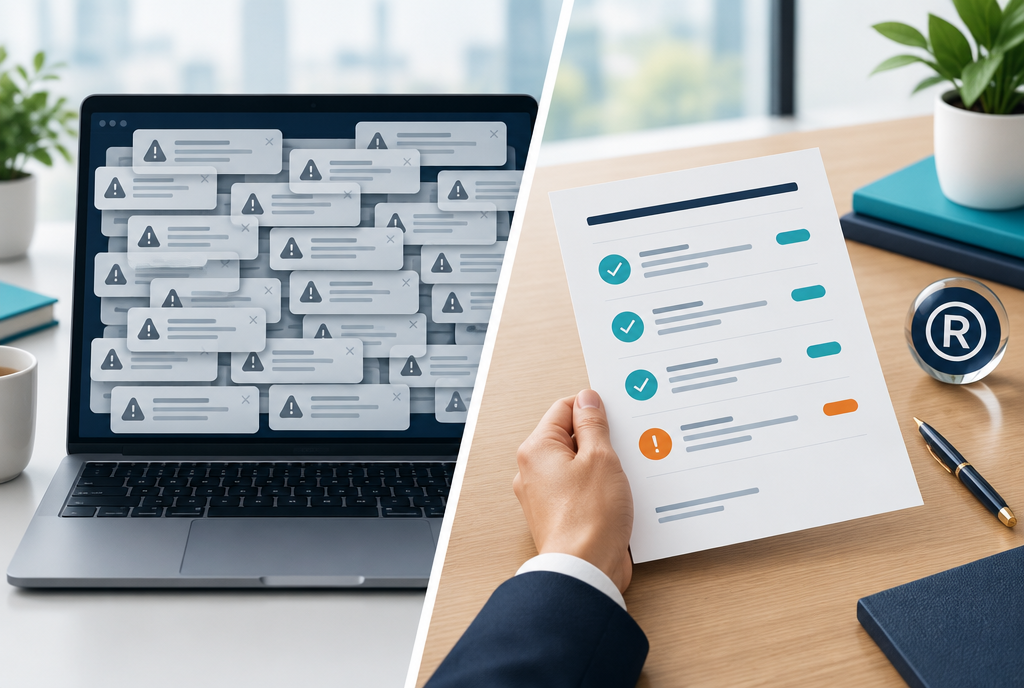
Search for “trademark monitoring” and you’ll find two very different kinds of offers. On one side are software platforms that promise automated alerts whenever something similar to your brand appears. On the other are law firms offering a “trademark watch” handled by attorneys.
Both aim to solve the same problem: catching copycat trademarks before they become expensive. But they work differently, cost differently, and suit different businesses. Here’s how to decide which one you actually need.
What Trademark Monitoring Software Does
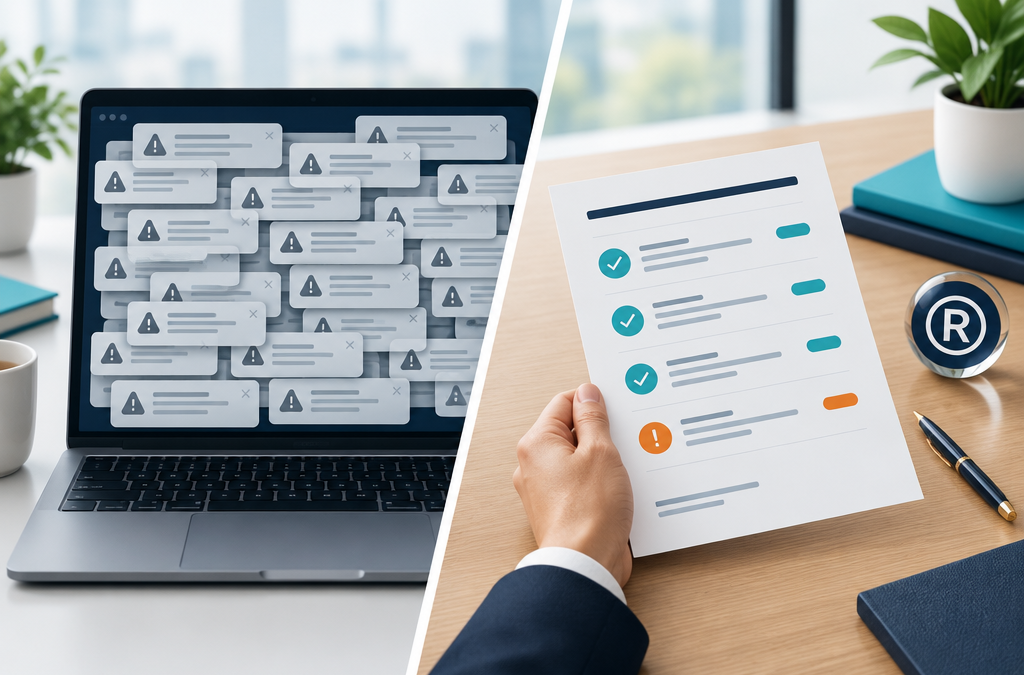
Monitoring software runs automated searches against trademark databases and, depending on the product, other sources such as domain registrations, online marketplaces, and social media. When it finds a mark that scores as similar to yours, it sends an alert or adds it to a dashboard.
Good software is useful. It checks far more filings than you could by hand, it runs continuously, and it’s usually priced per mark per year, which makes it affordable for a single brand.
The limits show up when the alerts arrive:
- Volume. Similarity algorithms are tuned to avoid missing anything, so they flag a lot of marks that pose no real risk. A common name can generate dozens of alerts a month.
- No legal judgment. A similarity score isn’t the same as likelihood of confusion. Whether two marks actually conflict depends on the goods and services, the market, how strong your mark is, and how customers buy, which software can’t weigh.
- No deadlines. Many tools tell you a mark exists but not that you have, say, 12 days left to oppose it.
- No action. When something serious turns up, you still need someone to file an opposition, write a cease and desist letter, or negotiate.
What an Attorney-Led Watch Service Does
An attorney watch usually starts with the same kind of automated searching. The difference is what happens next. A trademark attorney reviews the results, discards the noise, and reports only the marks that pose a real risk, along with why they matter and what your options are.
A good attorney watch should also:
- Set up the search around your actual brand: word variations, design elements, related classes, and the markets you sell in
- Track opposition and response deadlines so nothing slips
- Explain each risk in plain English, including when it’s better to do nothing
- Handle the follow-up, from a letter of protest to an opposition or a negotiated coexistence agreement
Side-by-Side Comparison
| Monitoring software | Attorney watch service | |
|---|---|---|
| Cost | Lower, usually a yearly fee per mark | Higher, but quoted upfront and includes review |
| Who reviews results | You | A trademark attorney |
| False alarms | Many | Filtered out |
| Risk analysis | Similarity score | Legal assessment of likelihood of confusion |
| Deadline tracking | Often not included | Included |
| Taking action | Up to you | Recommendation and filing handled for you |
Which One Do You Need?
Software (or free tools) can be enough if:
- You have one mark in one class and a modest budget
- Your name is distinctive, so alerts are rare and easy to judge
- You have time to review alerts and know when to call a lawyer
If that’s you, start with the free steps in our guide on how to monitor your trademark, and add software if you want broader coverage.
An attorney watch makes more sense if:
- You own several marks, logos, or classes, or sell in more than one country
- You sell on Amazon, Etsy, or other marketplaces where copycats appear quickly
- Your brand is a major business asset, for example ahead of fundraising or a sale
- You have a pending application and want to block conflicting filings before yours registers
- You’ve already had a copycat problem and don’t want to miss the next one
Some businesses use both: software for broad, cheap coverage, and an attorney to review the shortlist and act. That hybrid approach is often the best value for growing brands.
What to Look for in Any Monitoring Option
- Coverage: USPTO filings and the Official Gazette at minimum, plus marketplaces, domains, and other countries if they matter to you.
- Design mark searching: logos need image or design-code searching, not just word matching.
- Report frequency: weekly or monthly reports, with urgent items flagged right away.
- Clear pricing: know the yearly cost upfront and what counts as extra.
- A path to action: if something serious turns up, who files the response, and how fast?
Frequently Asked Questions
What is trademark monitoring software?
Trademark monitoring software automatically searches trademark databases, and sometimes domains, marketplaces and social media, for marks similar to yours and sends alerts when it finds them.
Is trademark monitoring software worth it?
For a single distinctive mark and a business owner with time to review alerts, it can be good value. Its main weakness is that it produces many false alarms and can't judge whether a match is a real legal risk or track response deadlines.
What is the difference between a trademark watch and trademark monitoring?
The terms are often used interchangeably. A trademark watch usually refers to watching trademark office filings, while trademark monitoring is often used more broadly to include online use such as marketplaces, domains and social media.
Can I use monitoring software and an attorney together?
Yes. Many growing brands use software for broad coverage and have an attorney review the shortlist of real risks and handle any action. This hybrid approach is often the best value.
What should a trademark monitoring service cover?
At minimum, new USPTO filings and the weekly Official Gazette. Depending on your business, it should also cover design marks, online marketplaces, domain names, social media and trademark offices in other countries where you sell.
Talk to Us About Monitoring Your Brand
Drishti Law offers attorney-led trademark monitoring services scaled to your brand and budget. We’ll tell you honestly whether you need us or whether software alone will do. Call 773-234-1139 or book a free consultation.

Sahil Malhotra
Sahil Malhotra is an Intellectual Property Attorney, who founded Drishti (“vision”) law because of his vision in protecting dreams and ideas.
He provided individuals and small businesses with an opportunity to enhance their IP’s value by helping them register trademarks and successfully argue against office actions. In addition to his training and experience, he has been deeply involved in the multifaceted IP portfolio at UIC and continues to be associated with IP organizations and conferences.
To know more about Sahil Malhotra — Click Here
You may follow Sahil Malhotra on Facebook: Sahil Malhotra and on Instagram: @Sahil Malhotra